The history of Kerala’s Syrian Christians is closely connected with one of the oldest Christian traditions in India—the tradition of St. Thomas the Apostle.
According to ancient Christian tradition, St. Thomas arrived on the Malabar Coast in 52 CE and preached Christianity among the local communities. While the historical details of this tradition continue to be discussed by scholars, the tradition of St. Thomas has remained deeply rooted in the history and identity of Kerala’s Christians for many centuries.
Over the centuries, some of Kerala’s Christian communities developed close connections with the Christian communities of the East, particularly the East Syriac Christian tradition. Syriac became an important liturgical language, and elements of East Syriac religious traditions became part of their worship and religious life. This eventually contributed to the name by which these communities became widely known: Syrian Christians, or Suriyani Christians in Malayalam.
Their history, however, was never isolated from the wider world.
The arrival of the Portuguese in Kerala during the sixteenth century brought major changes to the Christian communities of the region. Religious and political disagreements eventually led to divisions within the Kerala Christian community. Over the following centuries, different traditions and ecclesiastical bodies emerged, including the Syro-Malabar Catholic Church, the Malankara Orthodox Syrian Church, the Jacobite Syrian Christian tradition and the Mar Thoma Syrian Church, among others.
These communities developed their own identities, but they continued to share many elements of Kerala’s older Christian heritage.
Their cultural history also became closely connected with the many peoples and powers who arrived on the Malabar Coast. Trade, migration, religion and colonial contact all contributed to changes in clothing, architecture, language and, perhaps most visibly, food.
A Cuisine Between Kerala and the World
Syrian Christian cuisine is not simply a foreign cuisine brought into Kerala, nor is it completely separate from Kerala’s culinary traditions. It is better understood as a cuisine that developed through the meeting of several traditions.
At its foundation lies the food culture of Kerala itself: rice, coconut, coconut milk, local vegetables, seafood, spices, tamarind and a remarkable variety of herbs and seasonings. To this were added culinary practices that developed through centuries of contact with West Asia and Europe, as well as through the movement of people and ideas within the Indian subcontinent.
The result is a distinctive cuisine in which local ingredients and techniques coexist with influences from outside Kerala.
Fish occupies an important place on the Syrian Christian table. So do different kinds of meat, including beef, pork, mutton and chicken. Historically, game and other meats were also consumed in some communities and regions. Coconut appears in many forms—freshly grated, ground into pastes, or pressed into rich coconut milk. Spices are used generously, often in combinations that allow the flavour of the principal ingredient to remain important.
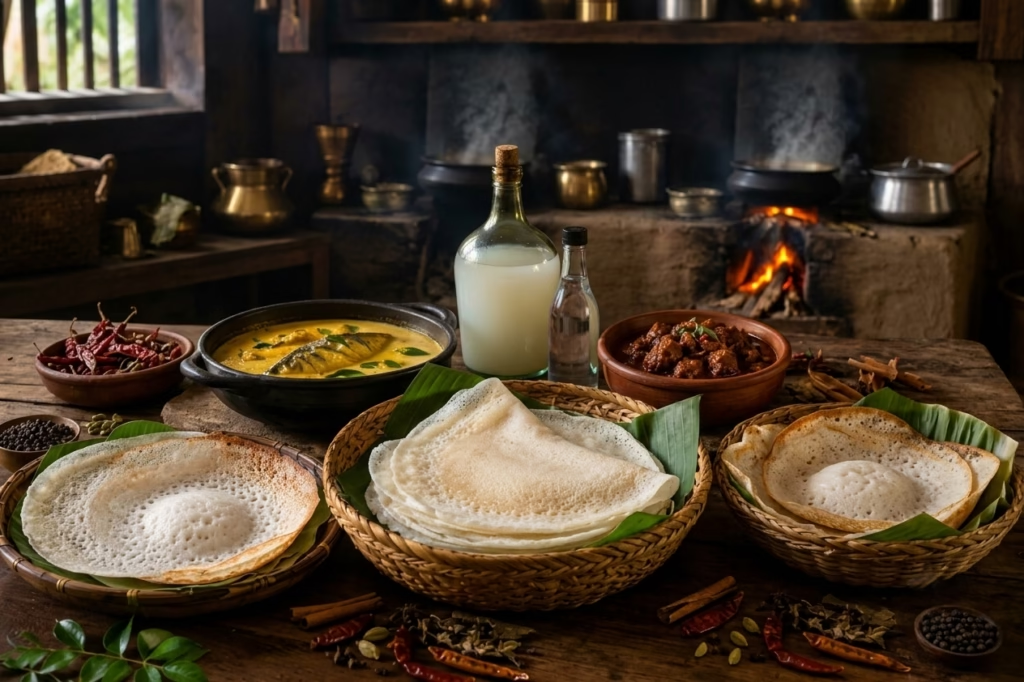
Some Kerala foods also reflect the long history of fermentation in the wider culinary traditions of South India. Foods such as appam and kallappam are prepared from fermented rice-based batters, although the origins and historical development of these foods extend beyond the Syrian Christian community and cannot be attributed to a single culture. Fermentation was therefore not a uniquely Syrian Christian practice, but rather one of the techniques that Kerala cooks incorporated into their own culinary traditions.
Vinegar has a particularly interesting place in dishes associated with European contact. Portuguese culinary traditions introduced new ways of using wine and vinegar in meat preparations. Over time, these ideas were adapted to local ingredients and tastes, producing dishes such as Kerala-style vindaloo. Although its ancestry can be traced to the Portuguese vinha d’alhos, the Kerala version developed its own distinctive character.
European contact introduced or popularised several ingredients, techniques and dishes that eventually became part of local cooking. British influence became particularly visible during the colonial period in baking and in the growing popularity of cakes, biscuits, puddings and other oven-baked foods. Yet even here, Kerala cooks adapted these ideas rather than simply reproducing European recipes.
The Indian subcontinent also contributed to the development of this cuisine. Centuries of interaction with different Indian communities and culinary traditions brought new approaches to meat dishes, rice preparations, rich gravies and the use of aromatic spices. It is difficult, however, to assign every ingredient or technique to a single outside influence. Kerala’s cuisine was shaped by overlapping networks of trade and cultural exchange rather than by one-way borrowing.
A Table of Many Journeys
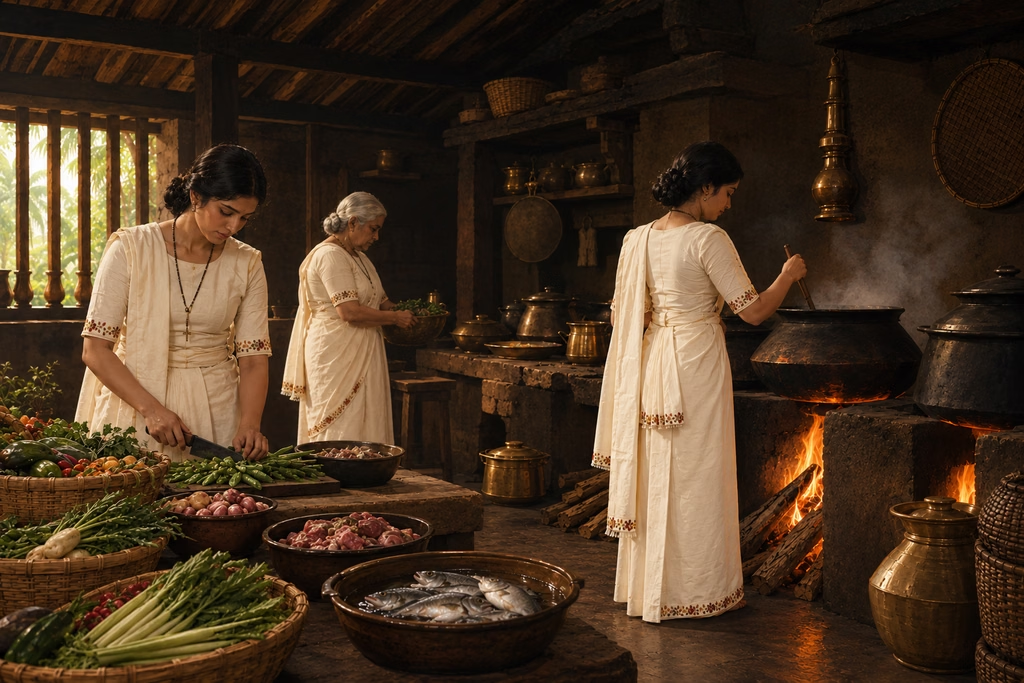
Have you ever imagined the journey of the spices and ingredients when enjoying appam with coconut-milk-infused mutton stew, or kallappam with a rich meat curry?
Think of fish molee, with its delicate coconut-milk gravy, or mappas, in which meat or fish is cooked with spices and coconut. Consider pork vindaloo, one of the clearest examples of how a culinary idea travelled across the Indian Ocean and was transformed in Kerala kitchens into something distinctly local.
Then there are cakes, puddings and other baked and sweet preparations that became increasingly familiar during the colonial period.
And there are foods connected not simply with everyday meals but with religious observances. Indri appam, traditionally prepared by some Kerala Christians for Pessaha (Passover), belongs to an important ritual food tradition. Its association with Pessaha reminds us that the Syrian Christian table is not only a record of cultural exchange; it is also a record of faith, memory and community.
Beyond the Sadya
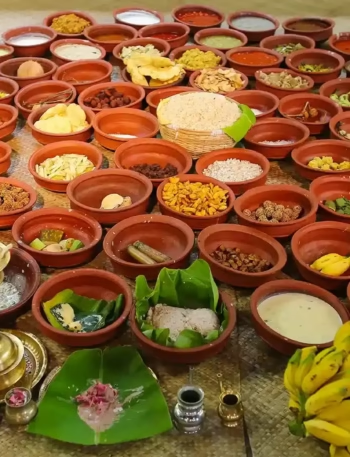
When Kerala food is discussed, the traditional sadya often receives much of the attention. Served on a banana leaf and built around rice, vegetables, pulses, pickles, coconut preparations and a series of accompaniments, the sadya is one of Kerala’s most celebrated culinary traditions.
But the culinary history of Kerala is much larger than the sadya.
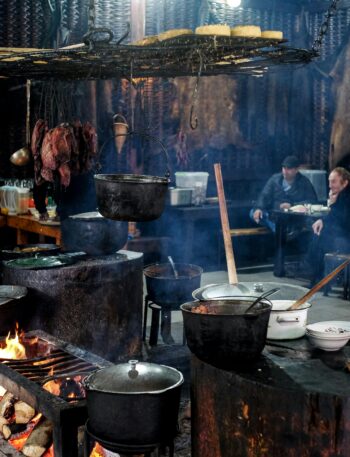
Alongside the vegetarian feast are the rich food traditions of Kerala’s Christian, Muslim and other communities. The Syrian Christian kitchen, in particular, preserves a remarkable collection of meat, seafood, fermented foods, breads, stews, curries, cakes and festive dishes.
Its importance lies not merely in the number of dishes it contains. It lies in what those dishes tell us.
A plate of food can preserve the memory of a migration. A cooking technique can reveal an old trade connection. A spice combination can show how local cooks adapted an unfamiliar idea. A cake can carry the memory of the colonial period, while a traditional festive dish can connect a community with a much older religious tradition.
The Syrian Christian cuisine of Kerala is therefore a culinary history written in ingredients rather than ink.
It carries the memory of Kerala’s ancient spice trade, its connections with West Asia, the arrival of European powers, the influence of colonial society, and the countless adaptations made by generations of local cooks.
What emerged was neither entirely foreign nor entirely unchanged.
It was something uniquely Kerala—a cuisine shaped by contact, preserved through tradition, and continually transformed in the kitchen.