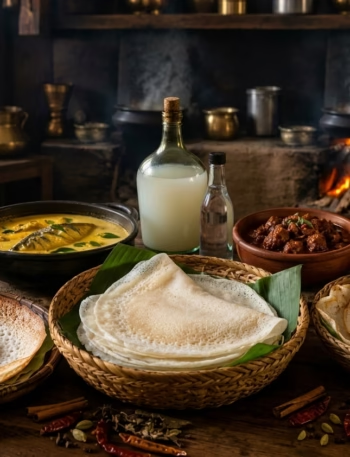
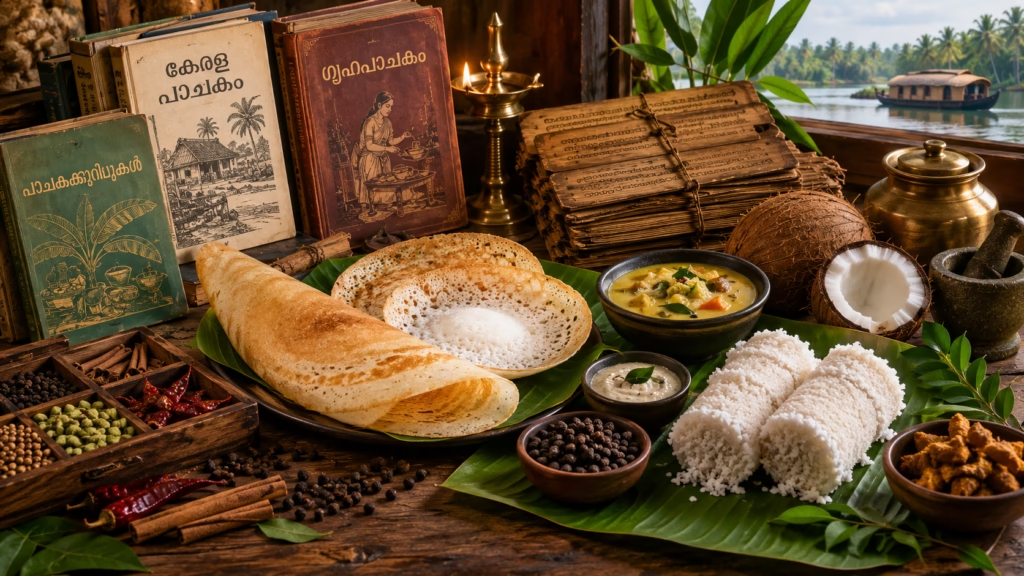
Kerala is known for its diverse and flavorful cuisine, including dishes such as appam, puttu, dosa, avial, fish curry, and a wide variety of coconut-based preparations. For generations, many of these recipes were not written down. Instead, they were passed verbally from mothers to daughters and learned through everyday cooking at home. Ingredients, measurements, techniques, and small family variations were often remembered through practice rather than recorded in books. As a result, only a limited number of Malayalam cookbooks are available, especially from the period before 2000.
The Kerala Cookbook Project brings together information about some of these Malayalam recipe books published before 2000.
The project aims to identify, document, and preserve books that recorded Kerala’s home cooking, traditional recipes, ingredients, and culinary practices. Some of these books are still available, while others are difficult to find or known only through limited references. By creating a record of them, this blog hopes to make Kerala’s written culinary heritage easier to discover and encourage further interest in the recipes and food traditions preserved in these books.
N. Velupillai and the Story of Pachaka Chinthamani
N. Velupillai was officially appointed as an education officer in the Kottarakkara Taluk during the reign of His Highness Sri Moolam Thirunal Maharaja. During this period, the Maharaja’s government began establishing many Malayalam-medium schools, also known as vernacular schools. Home Science was introduced as a subject in the school curriculum, particularly in girls’ schools.


At that time, however, there were no official textbooks available for teaching the subject. The Education Department and its selection committee therefore decided to develop a curriculum and prepare suitable books for Home Science. Cooking was an important part of the subject.
N. Velupillai was not only an education officer but was also known as an excellent cook. Seeing the need for a proper book on cooking, he decided to compile a Malayalam cookbook during the 1890s. The result was Pachaka Chinthamani.
Pachaka Chinthamani is considered the first Malayalam cookbook published in Kerala.
The book was submitted to and approved by the educational selection committee, making it the only known Malayalam cookbook to have been officially selected as a textbook for the school curriculum. At the time, Home Science was taught mainly in girls’ schools.
A second edition of Pachaka Chinthamani was published in 1902. A few copies of this old edition can still be found in some libraries. Following the success of the book, N. Velupillai went on to publish other works on cookery. The original Pachaka Chinthamani mainly focused on vegetarian dishes. Later, in 1919, he published another cookbook titled Pachaka Lathika. In 1921, a further edition of Pachaka Chinthamani was published with a greater focus on non-vegetarian dishes.
N. Velupillai was married to Parvathi Amma, and they had a daughter named Kunju Lakshmi Amma. He assigned the copyright of his books to his wife and daughter, leaving them an important connection to his literary and culinary legacy.
Smt. O. Sarada Bai
Very little is known about Smt. O. Sarada bai from her book Khana Kitab itself. However, the preface written by her husband, Mr. P. V. Ramunni, gives us some glimpses into her life. Mr. P. V. Ramunni appears to have held a senior position in a British-owned company and, during his nearly twenty-five years of official service, worked in different parts of British India as well as abroad. His travels and postings gave Saradabai opportunities to learn and collect dishes from different regions of India and from other countries.


These recipes were later compiled and published as Khana Kitab, with a preface written by her husband. Unlike many cookbooks of the period, Saradabai does not provide a separate introduction or discussion of the book. She begins directly with the recipes, allowing the collection itself to speak for her culinary knowledge. The book was published by Cherupushpam Press, Irinjalakuda.
Further details about Smt. O. Sarada bai, her life, and her work will be added here as more information becomes available.
Kudamaloor K. K. Gopalapillai
Kudamaloor K. K. Gopalapillai was a notable figure in the history of Malayalam publishing. He was the editor of Rajarshi (രാജർഷി), a magazine named after the former Maharaja of Cochin, Sri Ramavarma XV, who was popularly known as Rajarshi.
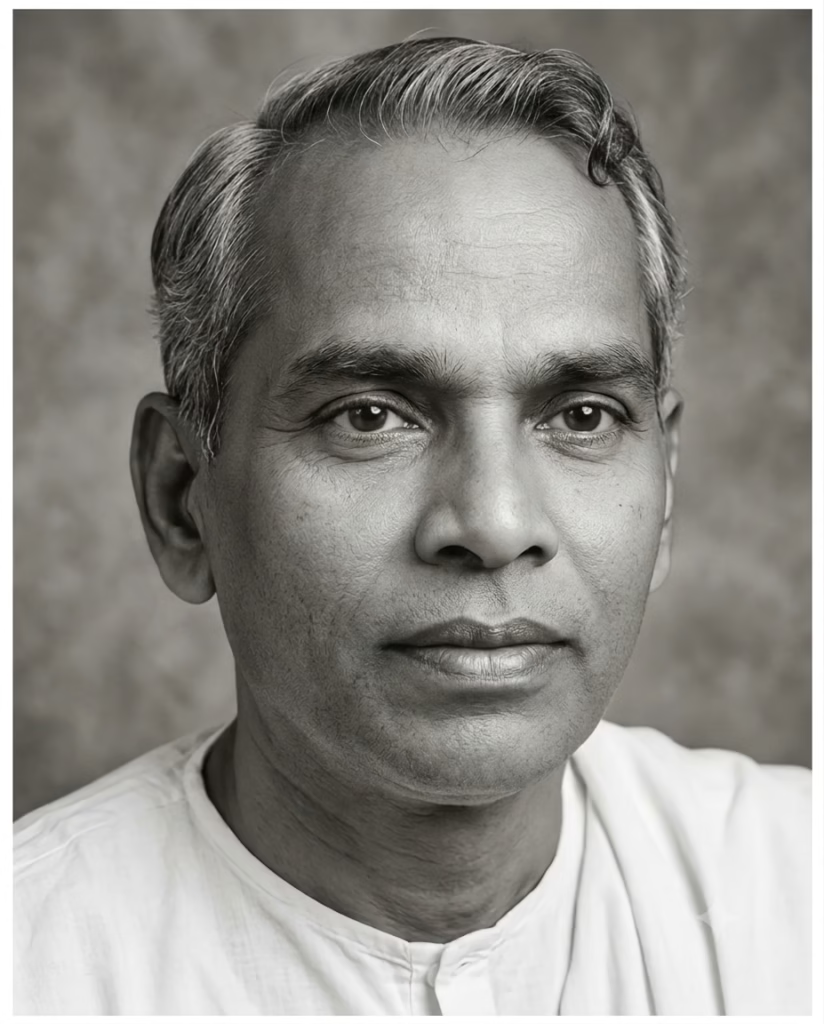
Gopalapillai published several books covering different subjects, including Sakthan Thampuran, Vyakarana Balapadam, Balopaharam, Keerthanamala, and Abhimanyu. He also made an important contribution to Malayalam culinary literature. Among his best-known cookbooks are Pachaka Yogamrutham, published in 1930, and Hrudyopaharam (Palahara Yogangal), published in 1931. Pachaka Yogamrutham was published in two parts, with one part devoted to vegetarian recipes and the other to non-vegetarian recipes.
The book also introduced egg aviyal and fish sambar to Malayalam cookbook literature.
These works form part of the early development of printed cookery literature in Malayalam.
Pachaka Yogamrutham was published in two parts, with one part devoted to vegetarian recipes and the other to non-vegetarian recipes.These works form part of the early development of printed cookery literature in Malayalam.


Gopalapillai was married to V. K. Parukuttiyamma, who later became the editor of Rajarshi. His work in publishing and literature, along with his contribution to Malayalam cookery writing, remains part of the history of early Malayalam print culture.
Kudamaloor K. K. Gopalapillai passed away on 26 July 1945.
N. G. Seetharama Iyer, Manjeri
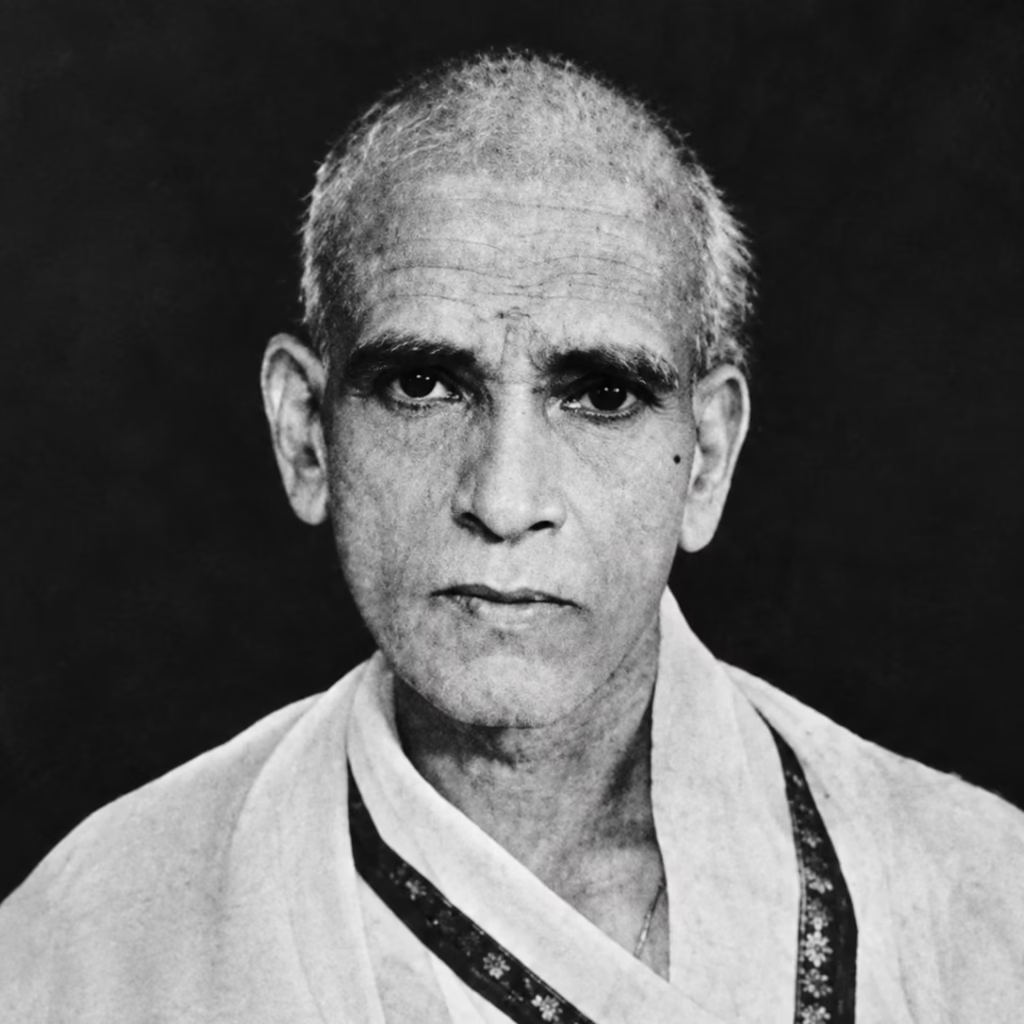
N. G. Seetharama Iyer of Manjeri, Malappuram district, published only one book, Bhakshya Pachakavidhi, in 1934. Although he left behind a single book, his life was closely connected with cooking. He was known as an excellent cook in Manjeri and also ran a coffee shop.
Bhakshya Pachakavidhi contains recipes for a variety of sweet and savoury snacks, along with other food preparations. One of its notable features is the use of precise measurements and details about the quantity or yield that can be expected from each preparation. This makes the book particularly useful for those preparing food in larger quantities. It appears to have been written mainly with commercial cooks and food businesses in mind, while the recipes can also be adapted for home cooking.
The book has since been reprinted by Mathrubhumi Books, and printed copies are still available.
Mrs. T. N. Kurian and Pachaka Prakaranam
Mrs. Sosamma Kurian alias Mrs. T. N. Kurian made her mark in the history of Malayalam cookbooks through her book Pachaka Prakaranam. First published in 1938, the book is particularly notable for its collection of Syrian Christian recipes and offers a glimpse into the culinary traditions of the community during that period.
A second edition was published in 1958. Today, only a small number of copies of the early editions are known to survive, making Pachaka Prakaranam a valuable part of Kerala’s culinary publishing history.
Very little biographical information about Mrs. Sosamma Kurian is currently available. Her husband, Mr. T. N. Kurian, was the former Superintendent of the CMS Press in Kottayam, Kerala, where the first edition of Pachaka Prakaranam was printed.
As more reliable information about Mrs. Sosamma Kurian, her life, and her work becomes available, this section will be updated.
Mrs. B. F Varghese: A Beloved Name in Kerala’s Kitchens
Saramma Varghese, better known by the name Mrs. B. F. Varghese, is a name closely associated with the Kerala kitchen. From the 1960s to the 1980s, her cookbook was considered one of the most popular gifts for newly married Malayali women. Her books became part of many Kerala homes, and their popularity continued among Malayalis living abroad.
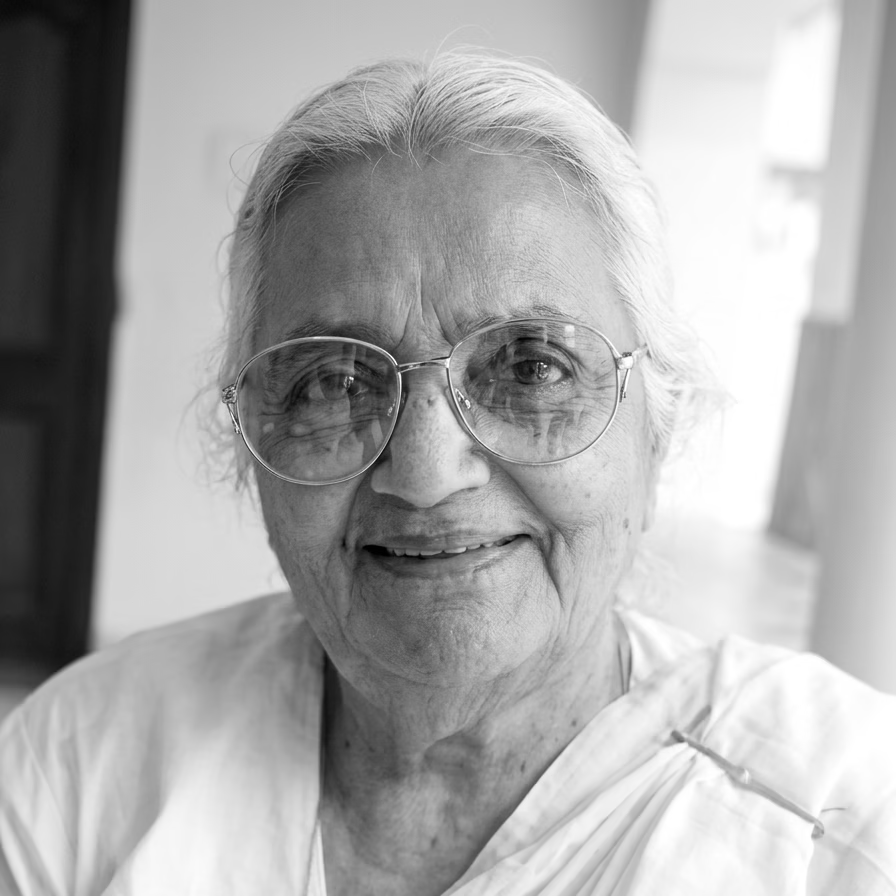
Saramma began contributing to Kerala Dhwani with a Sunday recipe column, sharing two recipes every Sunday. She continued this for nearly a decade, building a loyal readership through her practical and approachable recipes. At the request of her publisher, these recipes were later brought together in book form, resulting in her first cookbook, Pachakarani. Published in three volumes, the book became widely popular. It was later translated into English and published as Recipes for All Occasions, also in three volumes.
Saramma Varghese was not only a homemaker and cookbook author but also an active public figure. She served the community through organizations such as the Red Cross and the YWCA, taking on various responsibilities over the years. Her husband, Mr. B. F. Varghese, was a planter.
Saramma Varghese passed away in 2012, leaving behind a lasting legacy in Kerala’s culinary literature. Her recipes and books continue to be remembered by generations of Malayalis, both in Kerala and around the world.
Mrs. K. M. Mathew: A Lasting Name in Kerala Cookery
Annamma Mathew, better known as Mrs. K. M. Mathew, is a name that remains familiar to generations of Malayali women. Her interest and skill in cooking began at home, where her father, a surgeon, encouraged her to develop her culinary abilities. After her marriage, when she became part of the Malayala Manorama family, she continued to refine her knowledge of cooking. Her father-in-law, who was then associated with Malayala Manorama, later encouraged her to contribute recipes to the newspaper.
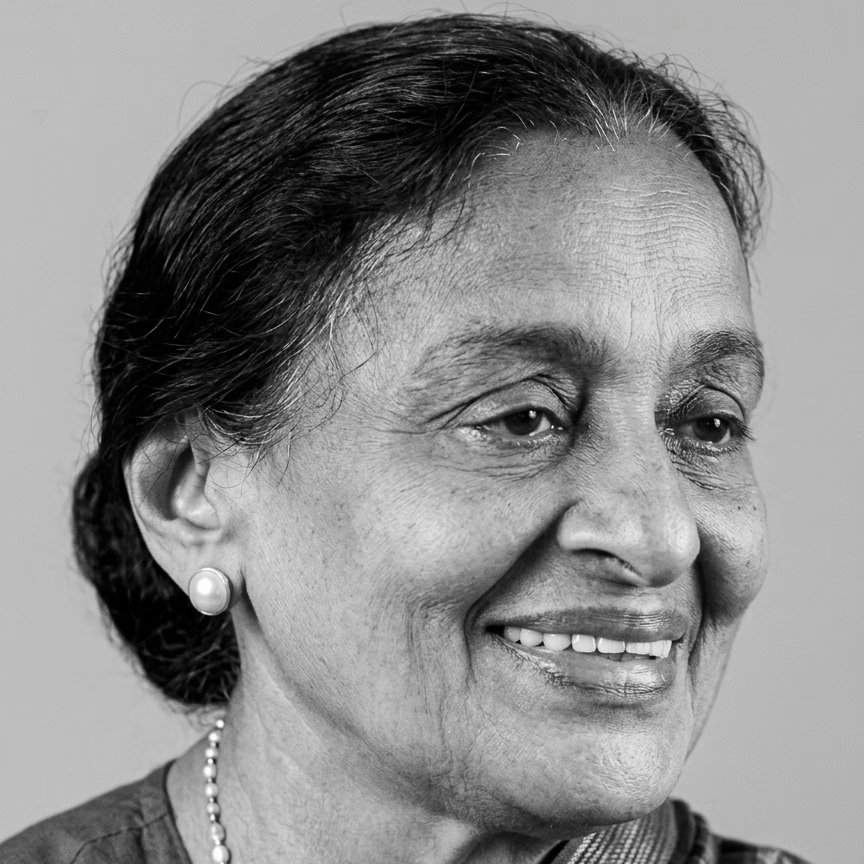
Her editorial abilities came to the forefront with the launch of Vanitha, the popular Malayalam women’s magazine, in 1975. She became closely associated with the magazine through her recipe columns and later served as its Chief Editor, a position she held until her death. Through her writing, she brought cooking, household knowledge, health and beauty into the everyday lives of Malayalam-speaking women.
Annamma Mathew wrote around 20 books, covering not only cookery but also subjects related to health and beauty. Her approachable recipes and practical advice made her books popular in Kerala and among Malayalis living outside the state.


Her husband, Mr. K. M. Mathew, was a planter when they married and later became the Chief Editor of Malayala Manorama. Annamma Mathew passed away in 2003, leaving behind a lasting legacy through her books, recipes and contribution to Malayalam women’s publishing.
Nalini Sreedharan: A Life Beyond Literature
Nalini Sreedharan Nalini Sreedharan was much more than a cookbook writer. She was a social worker, activist, writer and an important figure in Kerala’s literary and cultural life. Her contributions extended across literature, folklore and cookery, and she wrote nearly twenty books on different subjects.
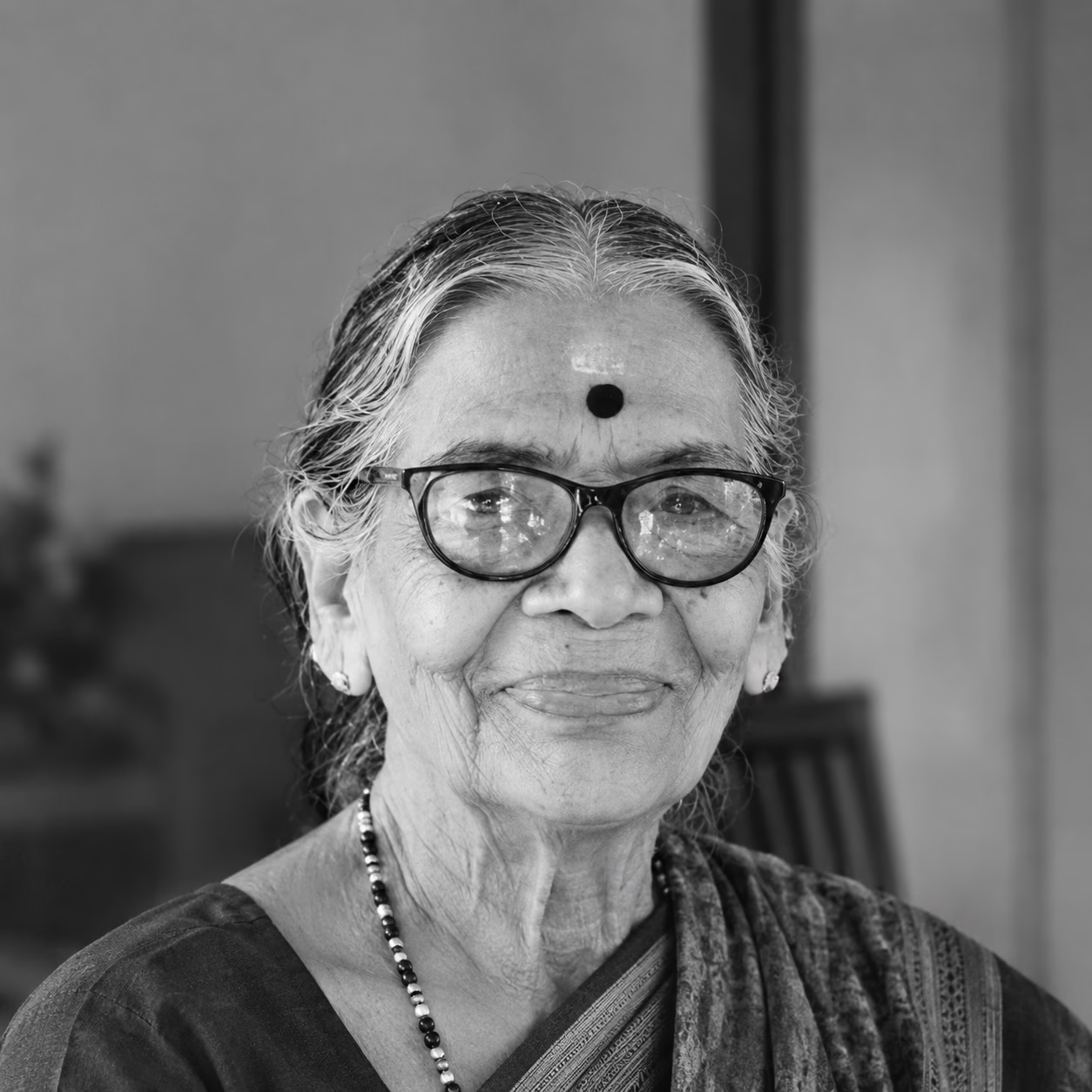
She was also the founder-editor of Mahilarangam, a women’s magazine that played an important role in encouraging women’s writing and public participation in Kerala. Many women writers who later became well-known in Malayalam literature began their literary journey through such magazines, and Mahilarangam provided an important platform for emerging women writers.
Among her notable cookery books are Gruhalakshmi, Pachakaragam and Pachakavedi. Through these works, she contributed to the development and documentation of Kerala’s culinary literature, while her wider writings reflected her interest in society, culture and folklore.
She was married to the journalist C. P. Sreedharan, who also served as the Chief Editor of Veekshanam. After his death, she turned increasingly to writing as a way of overcoming the emptiness left by his loss. Her literary journey continued until her later years.
She passed away in July 2023 at the age of 92.